Words build the building
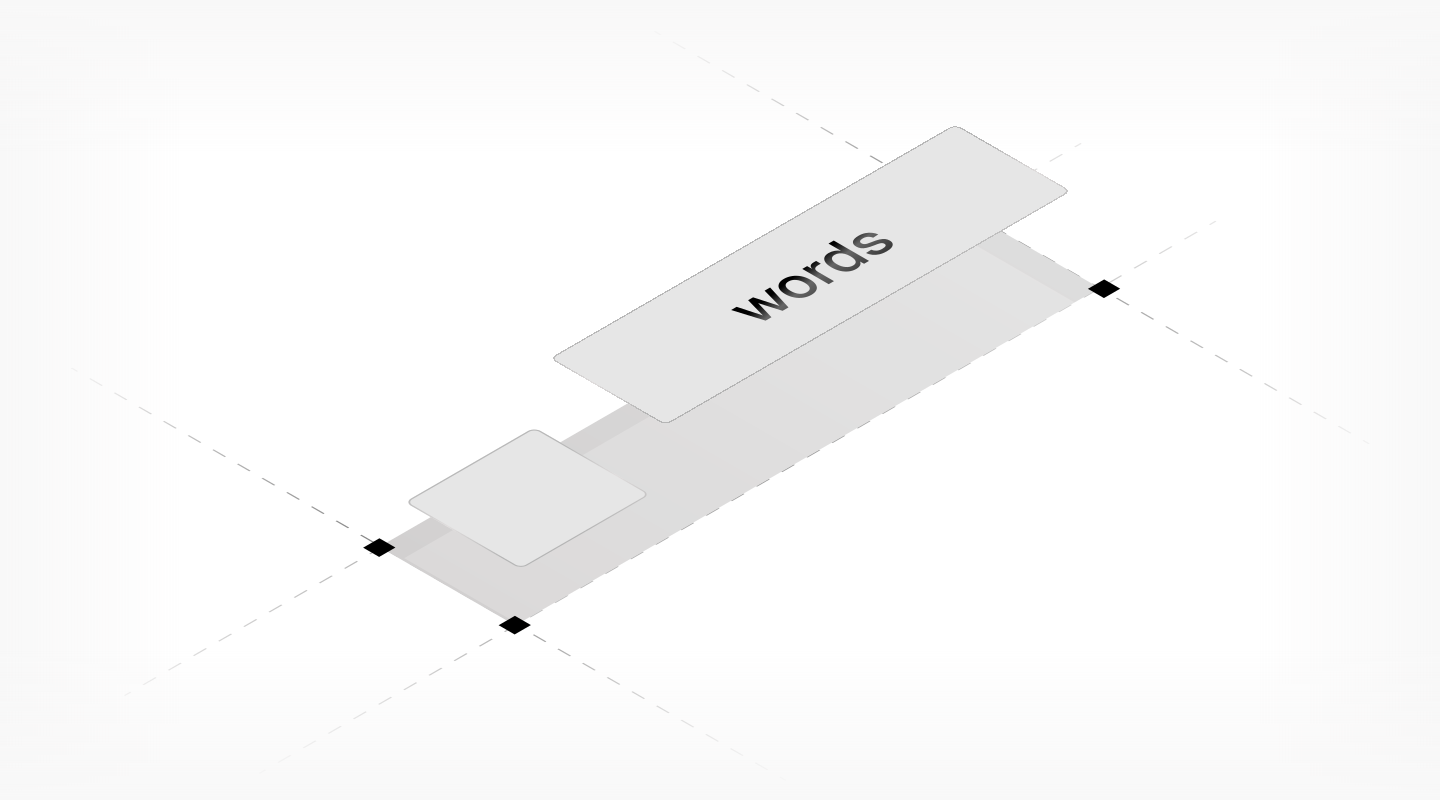
Two framings, two products
"No threat detected" and "Threat analysis found no issues." Same information. Different products entirely. The first is a promise. If something goes wrong later, the interface lied. The second is a report. It tells you what the system did without guaranteeing what it did not find. In security interfaces, the distance between those two framings is the distance between trust and litigation.
Every word is an obligation
I wrote more than fifty states for Safe Shield's transaction analysis component. Every one went through legal review. Not because lawyers enjoy reading microcopy, but because every word in a security interface is an obligation. John Searle's Speech Act Theory explains why: utterances do not merely describe reality, they create social commitments. The word "verified" creates an expectation of certainty. The word "warning" creates urgency and a duty of care. You do not get to use these words casually and then disclaim responsibility in a footnote.
Words commit first
Copy commits before visuals do. Place "Reviewing transaction" in a component, then replace it with "Verifying details." The same layout, the same colors, the same motion. The screen feels different. The words have narrowed what the visual is allowed to communicate. This is not a surface layer. It is the load-bearing decision. Plutchik's Wheel of Emotions provides the vocabulary for mapping these arcs intentionally: a flow that moves from calm to focused attention to the weight of consequence to the relief of completion. The words set the emotional trajectory. The visuals follow.
Write before you build
The practical implication changes how you sequence design work. Write the words first. Then build the container. Text determines component height, information density, emotional register, and scannability. A component designed around lorem ipsum is a component designed around nothing. The words are the requirements. Everything else is execution.
Copy is structure
In high-stakes interfaces, copy is structure. Every label is a load-bearing wall.