
Design decisions are bets, not deliverables
Anxiety with a cursor
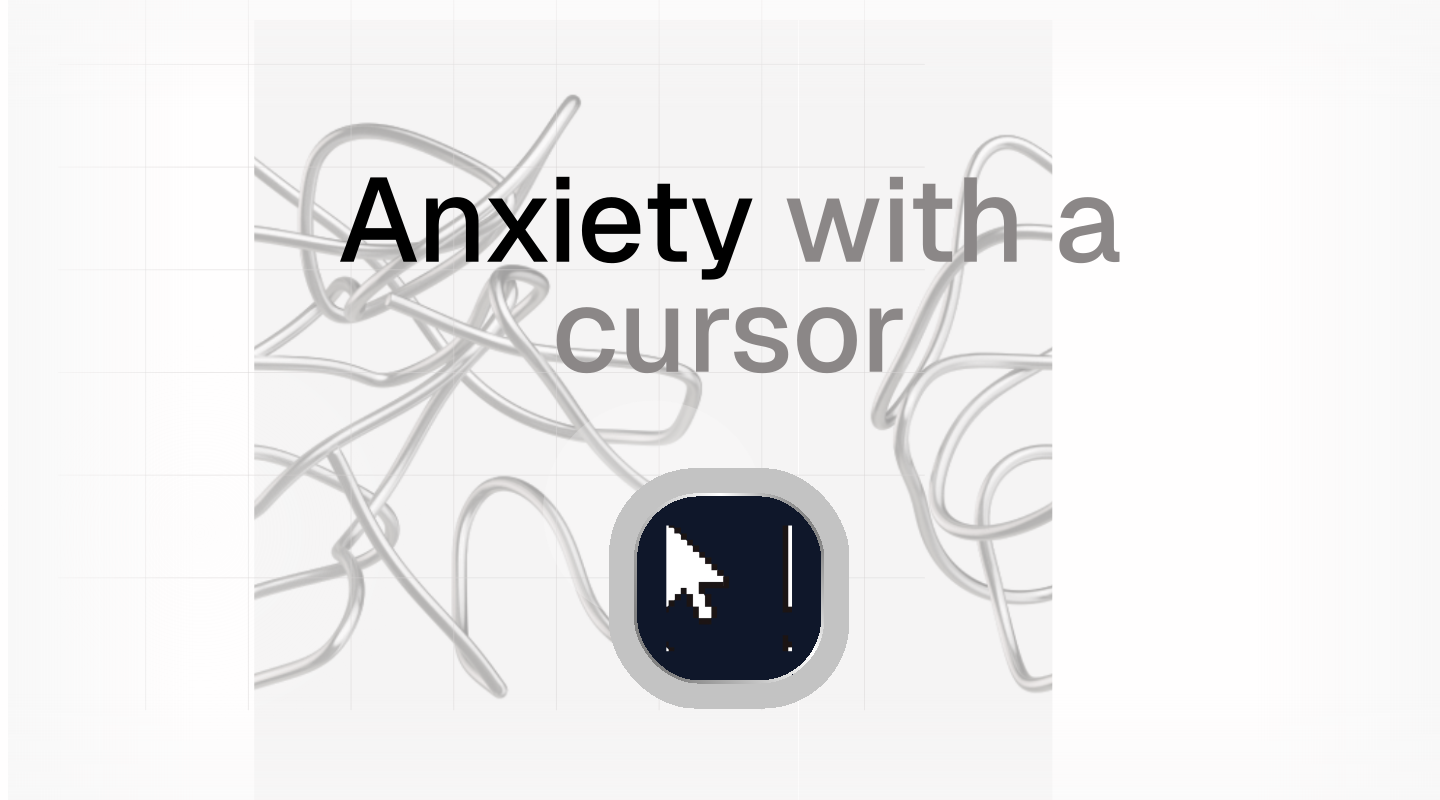
The pattern repeats across teams and companies. A designer opens Figma, explores endlessly, feels unsure, runs out of time, and ships whatever happens to be in the file at the deadline. That is not a process. That is anxiety with a cursor.
Appetite over ambiguity
Ryan Singer's Shape Up framework introduces the concept of appetite: decide how much time a problem deserves before you start solving it, then find the best answer within that constraint. This is not about cutting corners. It is about forcing clarity. Parkinson's Law is real. Decisions expand to fill whatever ambiguity you allow. An unbounded exploration is not rigorous. It is undisciplined.
Disposable principles
Vuokko Aro at Monzo writes different design principles for different problem spaces. Borrowing gets different principles than spending. Onboarding gets different principles than retention. These are not commandments carved into a wall. They are hypotheses scoped to a context, and they get replaced when the context changes. Disposable principles force you to think about what is actually true right now, not what sounded good in a workshop six months ago.
Cause-and-effect chains
The most useful design decisions are structured as cause-and-effect chains. A design choice produces a cognitive effect, which produces an emotional outcome, which produces a behavior:
- Generous spacing → visual calm → early trust
- One clear focal point → guided attention → faster action
- Predictable transitions → rhythm → user confidence
- Visible system response → predictability → confidence
- Calm tone → composure → trust
- Progressive disclosure → focus → reduced overwhelm
- Clear labeling → instant comprehension → lower cognitive effort
- Contrast → direction → confidence
- Subtle confirmation → reassurance → trust
- Polished micro-interactions → reliability → high trust perception
Each chain is a testable hypothesis, not a vibe. Thaler and Sunstein's Choice Architecture is built on exactly this kind of reasoning: every element of the environment shapes decisions, and the shaping should be intentional and measurable.
Learn fast, not guess right
Ship it. Measure the result. Revisit the hypothesis. Eric Ries's Build-Measure-Learn loop is the operating system for this approach. The best designers are not the ones who are right on the first try. They are the ones who are structured to learn fast. Speed of learning beats accuracy of guessing every time.
Hypothesis with a deadline
A design decision is a hypothesis with a deadline. Taste without this system is just preference.